Back in 2009, while I was working in India at ThoughtWorks graduate entry programme ThoughtWorks University, I first developed a visual model used to frame conversations around career development. I have used this again and again, and, in 2020 it was an inspiration behind the model that Thoughtworks now uses globally as part of career development.
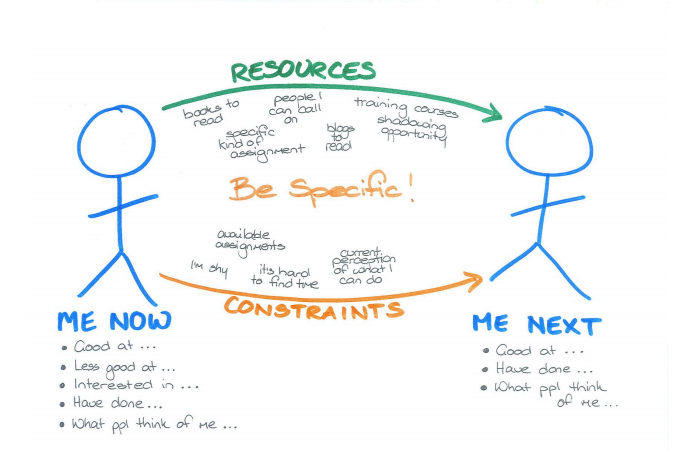
This did not somehow pop into my head fully formed — I believe that I drew from conversations and insights of the people I was working with at the time — Rixt, Sumeet and others — while coaching a large group at Thoughtworks University, our graduation programme for entry level new starters.
The conversation starts with how your coachee (or you if you're applying this to yourself) sees themselves now — what they think they're good at, what they're interested in and/or enjoy, and what they think others think of them. The good at, less good, and have done aspects are probably pretty familiar ground to most, but what might be less familiar is 'what do others think of me?' Having people think about what their current 'brand' is, for want of a better word. This could be elicited through feedback, or initially based on a hypothesis by the coachee, then validated / invalidated by feedback.
And if your coachee is not a goal-based person (which many people aren't), this broad approach to what 'next' or 'later' might look like is still useful. And I've written some of my thoughts on an alternative to goal-based career development here — Decision Based Career Development.
Then start thinking about what is next — use any timeframe that makes sense for them. It could be 3 months or 3 years. Anything is valid. I would suggest for longer term goals, an interim mode might be useful. Perhaps a 'me now', 'me next', 'me later' model could make sense.
Once you've worked out these things, list all the possible resources that could help achieve or accelerate towards that 'next' stage — individuals to learn from, books to read, courses to take, types of projects to volunteer for, opportunities to seek, anything. Think as broadly as possible, but be specific!
Then have a think about the constraints. What will get in the way? Be realistic. Be practical. Again, be specific.
Then use this information to make a plan that we can then use as a basis for conversations going forward. This is, as usual, guided by how your coachee wants to approach things. For some people a relatively high level picture might be enough, for others a more detailed deliberate plan. If my coachee is not sure on how to proceed in constructing a plan, I typically guide them down a risk based path to consider how to manage identified constraints and resources. Which of these resources or constraints are within my control? Which will I need the help of others to navigate?